
INNER LANDSCAPE
“Between fractures, color, and silence, this work becomes an inner landscape — a space where the past breathes inside the present.”
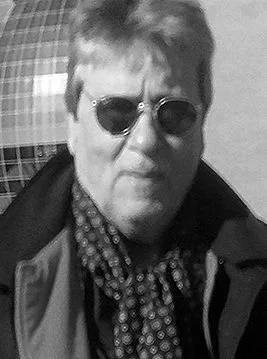
Artist Statement
My work begins with the body as a fractured surface.
In red, I find a territory of origin, memory, and tension — a skin that protects and, at the same time, opens to reveal what remains hidden. The figures I create are inner maps: fragments of childhood, primitive gestures, and symbols that persist beneath the outer layer.
The rupture is the moment of truth.
Through it, the interior insists on emerging.
Each work is a body‑archive, an attempt to understand what constructs us — the visible, the concealed, and what endures between the two.
Artist Bio
António Aleixo Cristo (AACristo) is a Portuguese visual artist whose contemporary practice explores red as a central language — a space where body, memory, and identity intertwine. His work develops around the idea of the skin‑surface: a field where fissures, cracks, and openings reveal drawings, symbols, and emotional fragments that inhabit the interior.
Working across digital painting, mixed media, and symbolic figuration, AACristo constructs body‑archives that expose layers of childhood, silence, and imagination.
He lives and works in the Algarve.
The Virtual as a Place of Origin
The virtual, in my work, is not technology — it is territory.
It is the space where matter transforms, where the body opens, and where childhood returns with the force of something that never disappeared. My figures, torn or fractured, do not seek the digital as escape but as continuity: a passage between what has been touched and what remains invisible.
Red is the skin, the surface where everything begins.
The virtual is the interior, the place where everything reorganizes.
Long before the virtual became a trend, I understood it as an emotional field. Between 1992 and 1994, when I directed the Galeria de Arte Virtual in Praia da Rocha, I was already exploring the possibility of the image living beyond the physical surface. Screens, CD‑ROMs, and continuous transmissions of works — painting, photography, drawing — were, for me, a way of extending matter, not replacing it. The virtual was already a space where the artwork continued breathing after the surface.
Today, that territory has become the core of my practice.
Fissures, cavities, and openings reveal drawings that belong to a childhood that never vanished. They are fragments of memory, primitive symbols, gestures that survive inside the body. In the virtual, these fragments find form, expand, and speak. The interior becomes visible — not as illustration, but as truth.
The virtual is the extension of the soul.
It is the place where what has no body gains presence.
It is the space where matter dissolves to reveal what truly constructs us.
Each work is a body‑archive that moves through states:
matter, photography, digital, virtual.
Not separate stages, but coexisting layers.
The virtual is simply the final opening — the threshold where the interior insists on emerging.
In my work, the virtual is not the future.
It is origin.