Original works exploring the body as an archive of childhood, memory, and rupture.
TRIPTYCHS — THE BODY AS ARCHIVE
This series of seven large‑scale triptychs examines the body as a site where memory, imagination and emotional history accumulate. Each work stages a tension between the exterior and the interior — between the protective shell we construct and the hidden worlds it struggles to contain. Through cracks, openings and exposed cavities, the figures reveal inner landscapes made of childhood symbols, intimate drawings, digital fragments and emotional residues.
Together, these triptychs form a continuous anatomy of vulnerability and resistance. The surfaces fracture, but the interiors remain vibrant, playful and alive, suggesting that what breaks on the outside often protects what survives within. Conceived for museum‑level presentation, the series invites viewers to move through a sequence of bodies that open themselves, one after another, like chapters in a shared psychological archive.
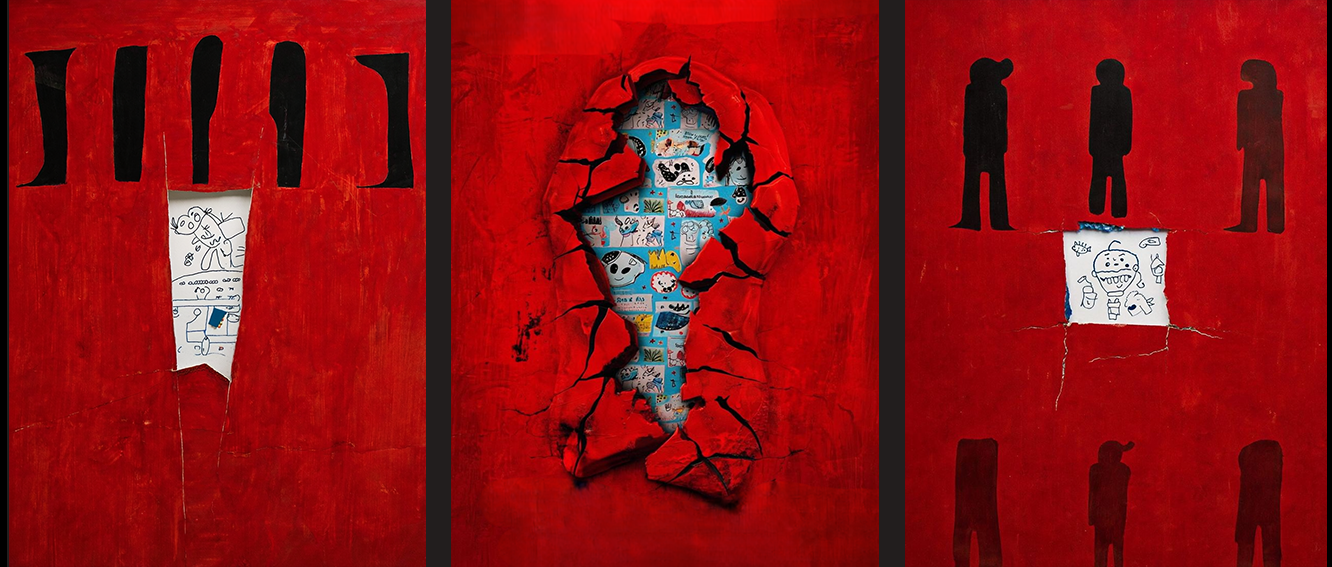
Triptych I — The Closed Body
Suggested size: 200 × 450 cm (overall)
Original work: 1963/2026 Mixed virtual media on canvas
Price: €16,500
A body that refuses to open. The surface is rigid, almost mineral. Something vibrates inside, but remains hidden. This is the moment before the fracture — the suspended breath, the silence before revelation. Here, red becomes a skin that protects what cannot yet be spoken.
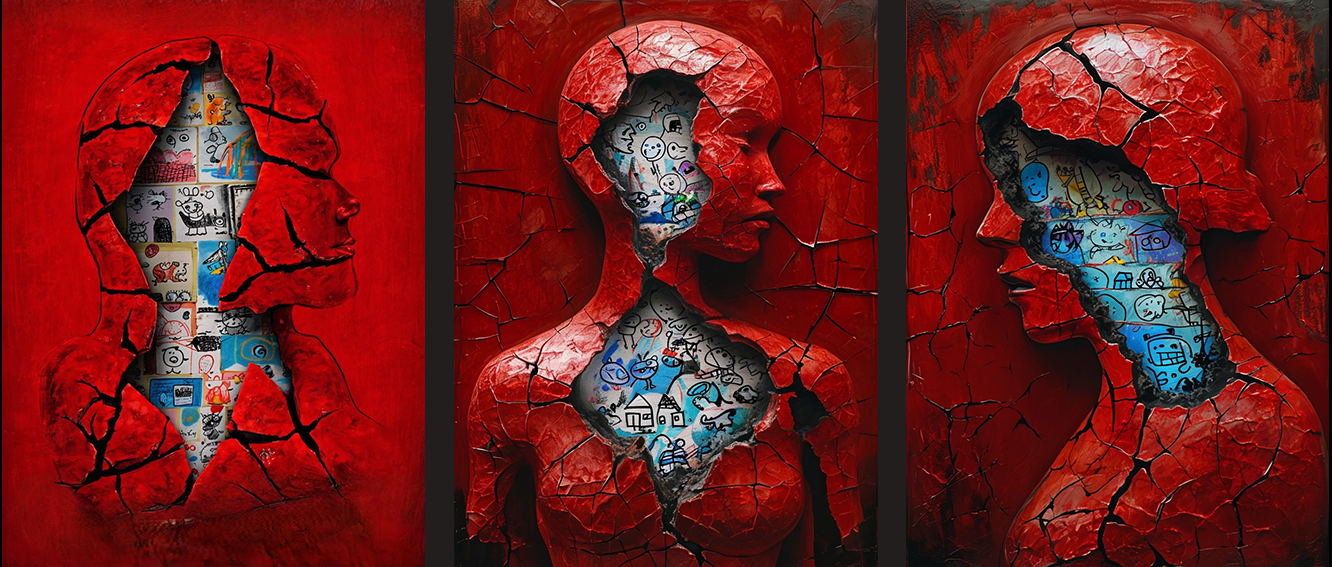
Triptych II — The Torn Body
Size: 200 × 450 cm (overall) 1963/2026 Mixed virtual media on canvas
Original work
Price: €17,500
The rupture arrives. The surface splits like a luminous wound. The interior emerges — blue, white, alive — in a gesture of exposure. This is the threshold: the body stops being a barrier and becomes a passage. Pain and revelation coexist in the same opening.
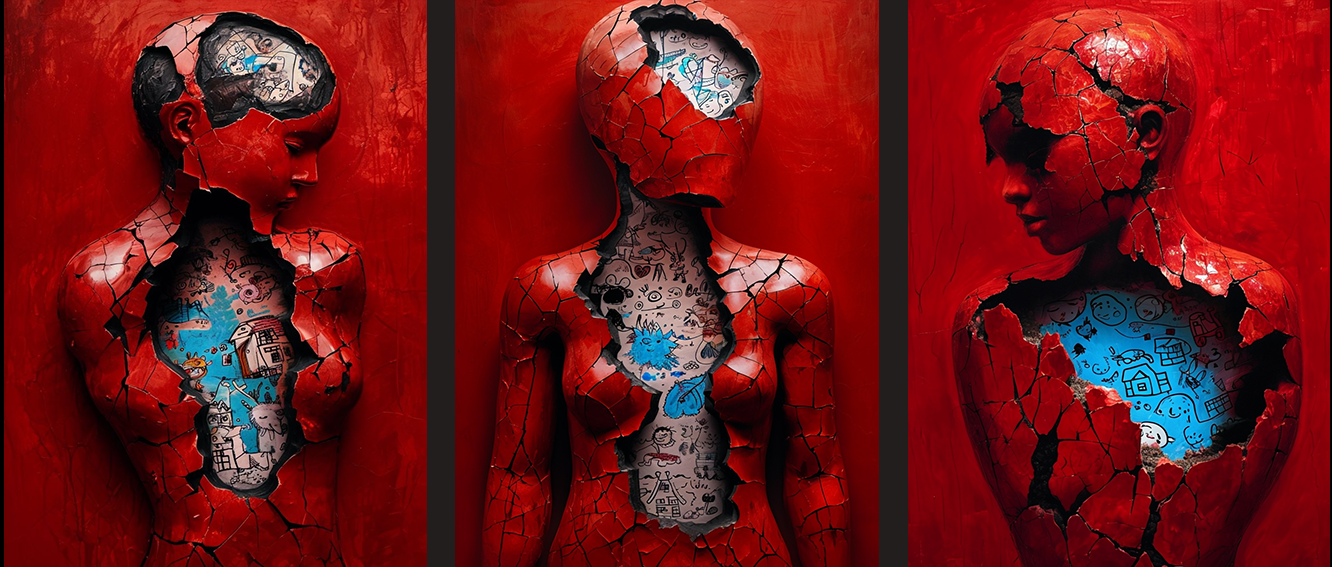
Triptych III — The Revealed Body
Suggested size: 200 × 450 cm (overall)
1963/2026 Mixed virtual media on canvas
Original work
Price: €18,500
The interior bursts outward. Childlike drawings, memories, fragments of life — everything erupts into visibility. The body is no longer a shell: it becomes an archive, a map, a surviving childhood. Colour becomes liberation, identity, resistance. Red opens to let the entire life inside it breathe.
Architecture of the Invisible
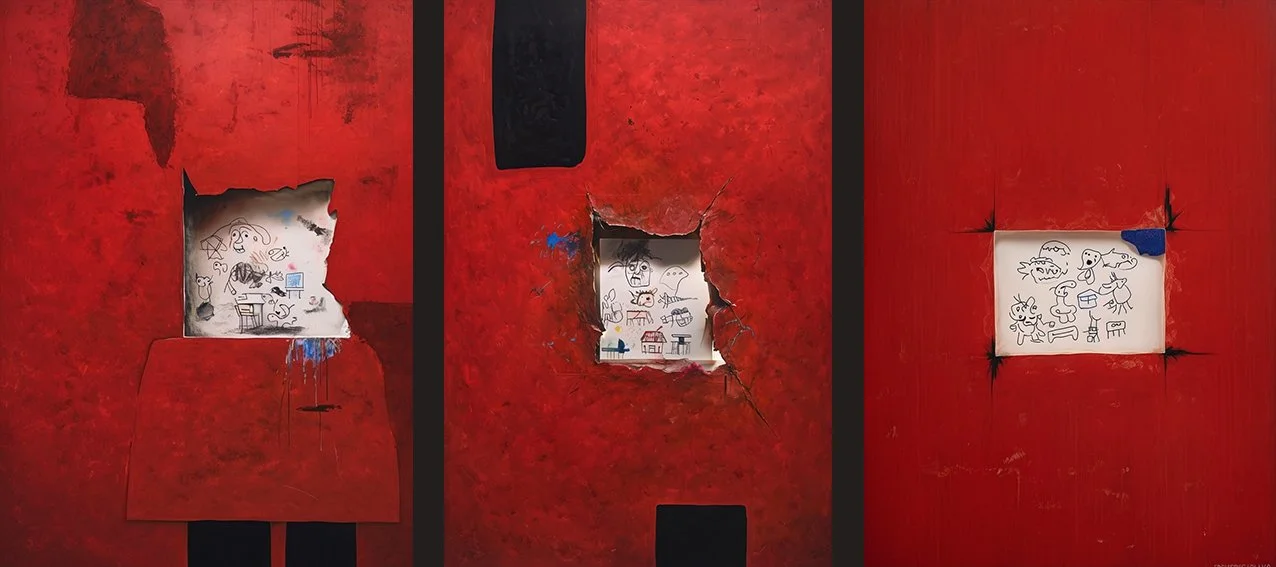
— Triptych I unfolds a dialogue between surface and interiority, where a dense, textured red field is opened through deliberate cuts that expose an unexpected inner world. The outer layer, expressive and almost geological, carries the weight of gesture and materiality; beneath it, child‑like drawings emerge as fragile traces of memory.
Architecture of the Invisible — Triptych I, 1963/2026 Mixed virtual media on canvas Overall dimensions: 200 × 450 cm (3 canvases, each 200 × 150 cm) Collection of the artist
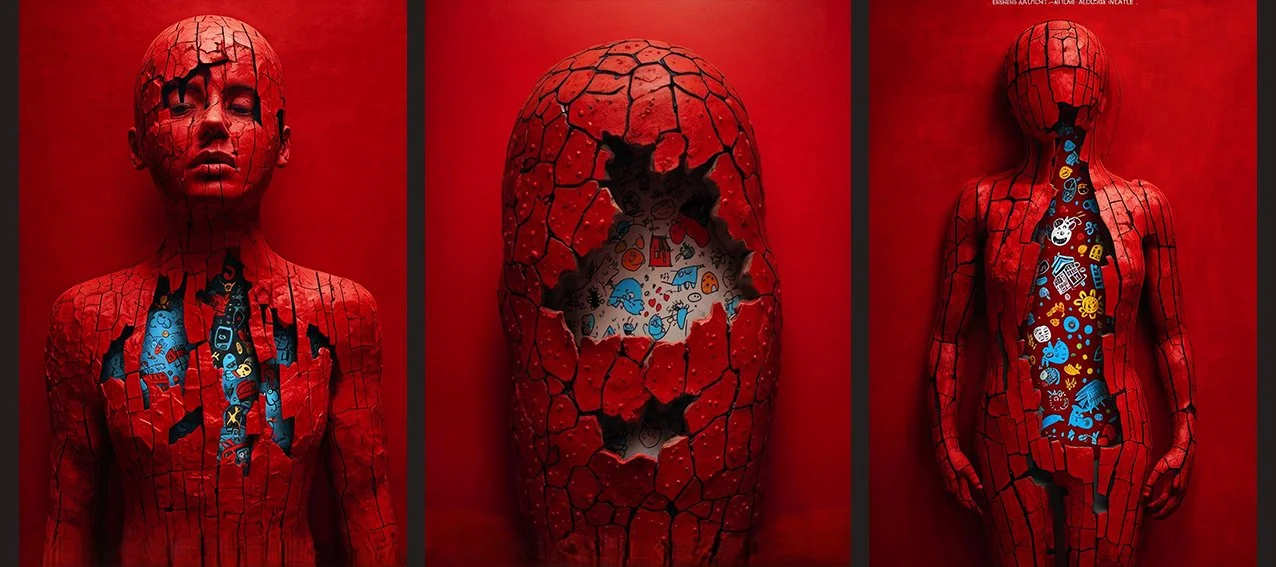
Architecture of the Invisible — Triptych II expands the investigation of interiority by shifting from abstract surfaces to fully embodied figures. Each panel presents a humanoid form whose red, cracked exterior functions as a protective shell — a constructed identity that fractures to reveal a vibrant inner world. The openings in the body expose layers of symbolic, playful and child‑like imagery, suggesting that beneath the hardened surface of adulthood lies a reservoir of imagination, memory and emotional truth.
The triptych stages a progression of revelation. The left figure exposes a digital, iconographic interior; the central figure opens into a white field of spontaneous drawings; the right figure reveals a deeper, more saturated red core filled with narrative fragments. Together, they form a psychological anatomy — three states of being, three ways of carrying the past within the present.
The work questions how identity is built and what remains hidden beneath the surfaces we show to the world. By cutting through the body, the artist cuts through the narrative of self‑protection, allowing vulnerability to become a site of beauty rather than fragility. The triptych invites viewers to consider their own internal architectures: what we conceal, what we preserve, and what we allow to be seen.
Architecture of the Invisible — Triptych II,1963/ 2026 Mixed virtual media on canvas Overall dimensions: 200 × 450 cm (3 canvases, each 200 × 150 cm) Price: €22,000 Collection of the artist
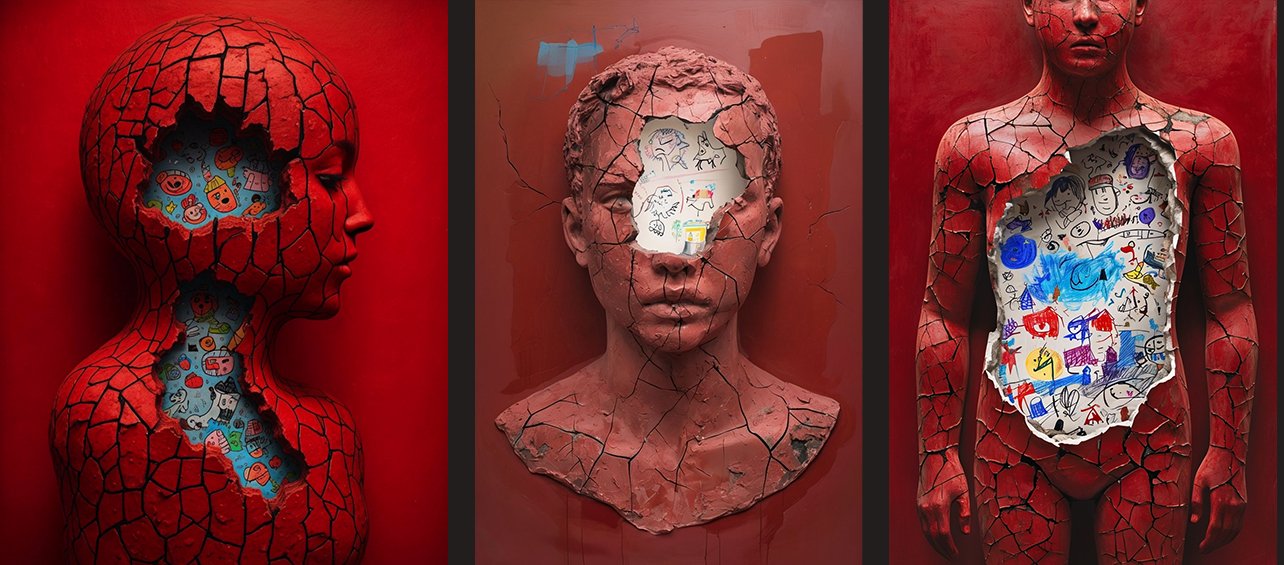
Architecture of the Invisible — Triptych III deepens the exploration of interior identity by presenting three fragmented bodies whose cracked red surfaces reveal the symbolic landscapes they carry within. Each figure becomes a vessel: a container of memories, emotions and narratives that resist the rigidity of the outer shell.
The left panel exposes a profile figure whose internal cavity reveals a vibrant constellation of icons, symbols and playful imagery. The central figure, stripped of facial features, opens into a white interior filled with delicate line drawings — a psychological void where innocence and vulnerability coexist. The right figure, more complete and frontal, reveals a dense collage of colours, characters and abstract forms, suggesting a fully inhabited inner world.
Together, the three bodies form a study of human architecture: how we fracture, how we conceal, and how we reveal. The cracked red exterior speaks of pressure, history and self‑protection, while the exposed interiors offer glimpses of imagination, trauma, humour and memory. The triptych invites viewers to consider the multiplicity within each person — the layers we build, the layers we break, and the layers that remain untouched.
Architecture of the Invisible — Triptych III, 1963/2026 Mixed virtual media on canvas Overall dimensions: 200 × 450 cm (3 canvases, each 200 × 150 cm) Price: €22,000 Collection of the artist
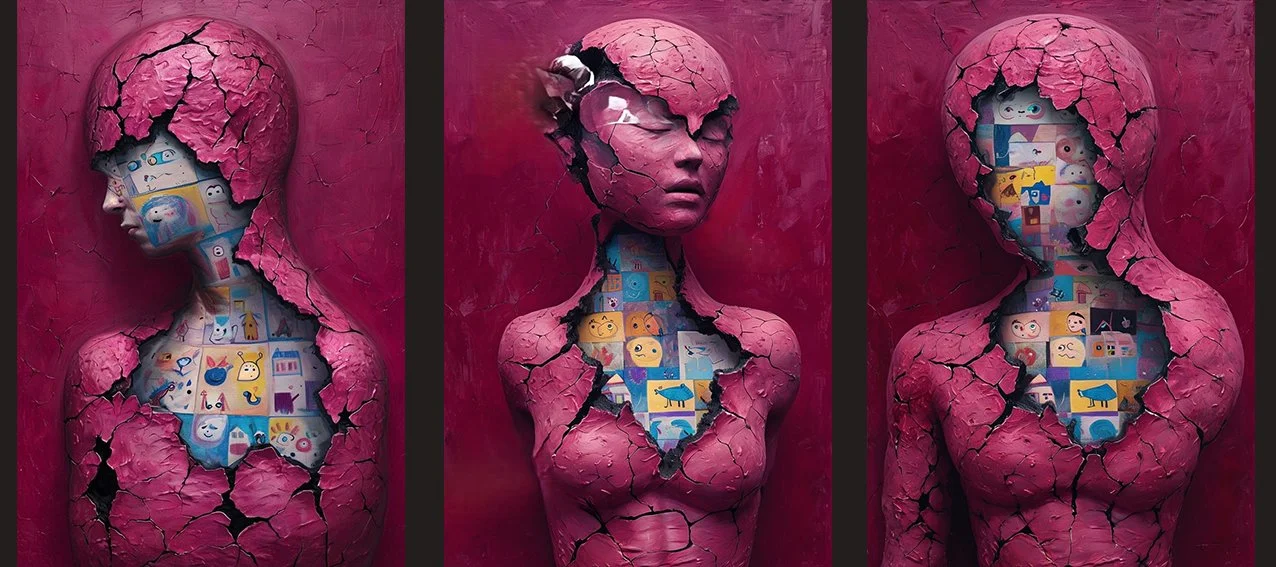
Architecture of the Invisible — Triptych IV introduces a softer, more introspective dimension to the series. The cracked pink surfaces evoke a gentler form of vulnerability, where the body appears less wounded and more in the process of opening itself to the world. Each figure reveals an interior composed of colourful, child‑like symbols arranged in a grid-like structure, suggesting an emotional archive carefully preserved beneath the skin.
The left figure, shown in profile, exposes a constellation of icons that feel digital, playful and immediate. The central figure, with closed eyes and a serene expression, becomes a meditative core — a quiet space where innocence and memory coexist. The right figure, more frontal and exposed, reveals a dense interior of expressive drawings, as if carrying an entire emotional landscape within the torso.
Together, the three panels form a study of tenderness and exposure. The pink shell, cracked but not broken, suggests that fragility can be a form of strength. The interior drawings function as emotional codes — fragments of identity, humour, trauma and imagination that shape the self. This triptych expands the series by shifting from rupture to openness, from confrontation to introspection, offering a poetic reflection on what it means to reveal oneself.
Architecture of the Invisible — Triptych IV, 1963/2026 Mixed virtual media on canvas Overall dimensions: 200 × 450 cm (3 canvases, each 200 × 150 cm) Price: €22,000 Collection of the artist